
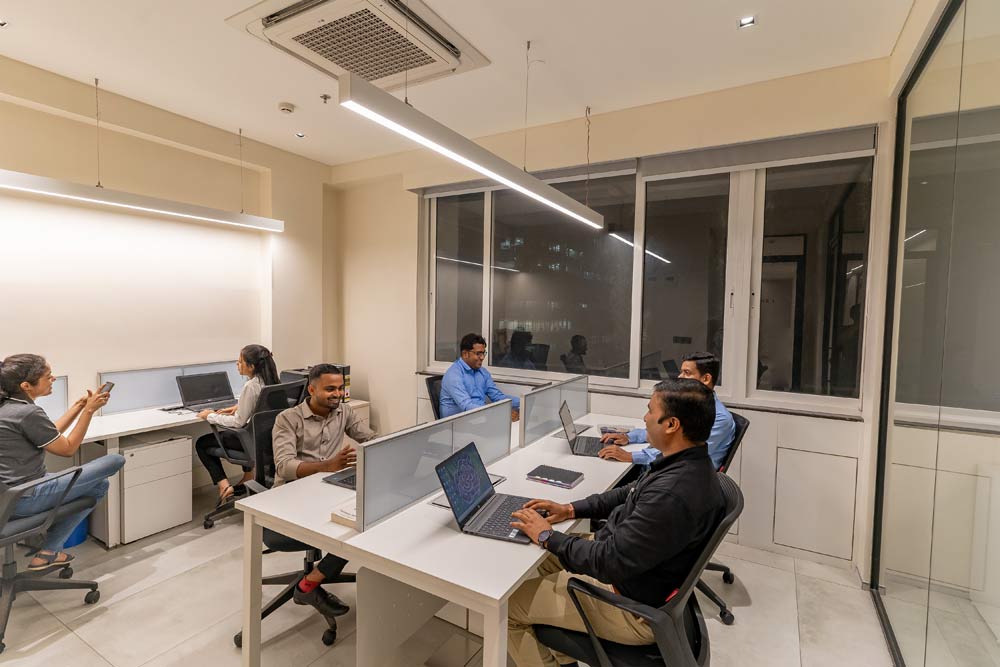
Corporate real estate teams aren’t exactly broadcasting this, but coworking models have become required reading inside a lot of enterprise HQs. Not to move people into coworking spaces – to steal the playbook.
After years of writing off WeWork as overhyped and coworking as a freelancer thing, large companies are quietly pulling apart what makes those spaces actually work – and running those principles back through their own buildings.
It’s one of the stranger reversals in workplace strategy. And it tells you something real about what was broken in the corporate office all along.
Corporate offices were built around predictability. Fixed desks, fixed floors, fixed departments. People used to think that work is something you do in one place at one time with the people around you.
Coworking spaces are really different. They were built around the idea that you have no idea who is going to show up or when they will come or what they will need when they get to the coworking spaces. So you have to design these spaces to be flexible to fit a lot of people and to be used in ways every day.
Hybrid work made corporate offices less predictable. The number of people at the office changes every day, floors are sometimes half empty, meeting rooms are overbooked and desks are empty. Not cosmetic ones. Structural ones. The coworking spaces have some answers that the traditional office does not have because the coworking model is more flexible.
The borrowing isn’t about exposed brick or barista setups. It’s about how space actually functions.
Three things keep coming up in workplace strategy discussions:
Activity-based zoning divides coworking spaces by work type, not by team. Focus zones, collaboration zones, social areas, phone pods. Corporate redesigns are now doing the same – moving away from department floors and toward zones where people match the space to what they’re actually doing that day.
The coffee bar and communal table in a coworking space aren’t perks – they’re how the space generates density and accidental conversation. Corporate offices are starting to design shared areas with that logic, not as a reward for showing up, but as the reason to.
Much of what makes coworking so sticky goes deeper than furniture – the hidden perks of coworking spaces are really about proximity-driven community, which is exactly what corporations are trying to recreate.
The people who run coworking spaces have always kept track of which coworking spaces get used when they get used and how many people show up to the coworking spaces. Now the people in charge of real estate are putting sensors in desks and conference rooms and actually changing the layouts based on what the data shows about the corporate offices. Sounds obvious. Most offices weren’t doing it before.
A lot of the companies now studying coworking models spent years dismissing them. The standard line was that coworking was for people who couldn’t afford real office space — freelancers, early-stage startups, teams between leases. Serious companies needed serious permanence.
Then the occupancy data started coming in after 2020. The serious companies with serious permanent offices were running at 35–40% utilization on a normal Tuesday. Meanwhile the shared coworking spaces with desks and communal kitchens were running really tight well used floors with less overhead than the corporate offices.
That’s uncomfortable to acknowledge publicly. Which is probably why most of this “studying” happens quietly, without press releases.
Copying the look without the logic doesn’t work – and a lot of HQ redesigns are doing exactly that.
Several large offices in the last two years added phone booths, community tables, and standing zones, then left the underlying structure untouched. Fixed team assignments, rigid desk booking, IT policies that make moving around harder than staying put.
The result is an office that looks like a coworking space and functions like a traditional one. The phone booths stay booked or stay empty. The community table becomes laptop overflow. Nothing collided that wasn’t already colliding.
Coworking spaces optimized for frictionless movement and voluntary density. You don’t get that by changing the furniture.
The corporate redesigns that are getting real results tend to share a few things.
They start with occupancy data, not assumptions about how people “should” use the space. They reduce assigned seating – sometimes to 50-60% of headcount – and design the remaining floor for shared, rotating use. They treat the office as something you choose, not something you report to. This is precisely the logic behind how fully managed office spaces increase team productivity – removing administrative friction so the space itself becomes the draw.
They also take collision logic seriously. The coworking model creates community through shared infrastructure and proximity, not through branded wall art or forced team events. The implicit deal is: show up, and something useful will probably happen. That’s what corporate offices are trying to rebuild.
Some are getting there. Most are still in the studying phase.
Now, the Corporate offices are changed. The real question was whether the redesign of the offices would just be a facelift or if it would actually rethink what the corporate offices are for.
The companies using coworking models as a serious design brief are asking the structural version of that question: what makes someone decide to come in? What happens when they do? Is this space organized around those answers, or around something older?
Coworking operators were asking those questions from the beginning. It just took the corporate world a few years – and some awkward utilization reports – to start taking them seriously.

Synergy Workspaces is a leading provider of fully managed co-working spaces in Sector V, Kolkata.