The business address may be seen as minor details, but in the real world of business, the minor details give you the trust. A customer will often see where your business is located long before they read your services or see your reviews or speak to your staff. That one thing can really make a difference in how serious, established, and professional your brand looks.
The right business address gives startups, freelancers, remote teams and small businesses a lot more than just a location to receive their mail. It is your brand’s image. It conveys a message, showing that your business is structured, reliable, and prepared to work in a corporate manner.
Your business address is putting in more work than you realize. It appears in the footer of your website, on your invoices, on your Google Business Profile, on your email signature. Each of those is an instance where somebody will take two seconds to decide if you look real.
A proper commercial or registered address tells people you’re not operating out of a spare bedroom (even if you are). It’s not about hiding that – plenty of successful businesses start at the kitchen table. It’s about presenting yourself the way your competitors already are.
Trust online is fragile. Since they can’t shake hands or see the office, everyone is looking for proxies. An address that appears correctly on Google Maps, corresponds with what is shown on your official documents, and reads like an established workplace does a lot of quite convincing. Google itself sets out specific guidelines for representing your business address on your listing, and straying from them can affect how your business shows up in search.
It also protects you legally and financially. Banks want a verifiable address to open a business account. Vendors want one before they extend credit. Even Google itself flags listings with residential-looking addresses more often for review, which can delay your visibility in local search.
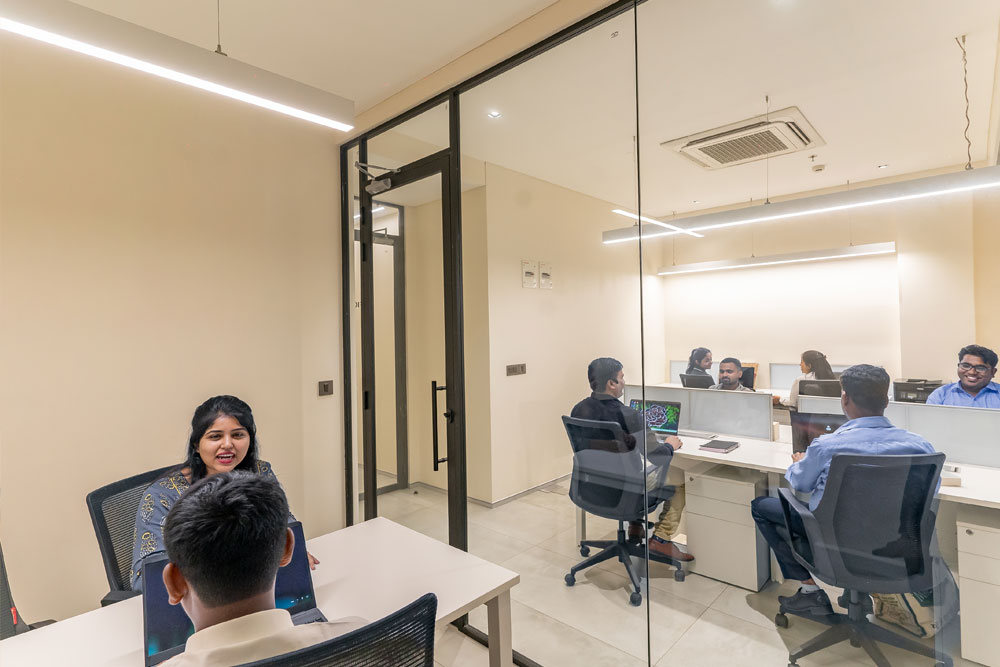
If your whole team works from laptops in different cities, the temptation is to skip the address question altogether. That’s a mistake. Remote and online-first businesses actually need this more, not less, because there’s no physical storefront to reassure anyone. This is one of the reasons startups increasingly choose shared offices over traditional leases – a shared workspace comes with a credible commercial address built in, without the overhead of a full office lease.
Think about it from a customer’s side. A local bakery doesn’t need to prove it exists – you can walk past it. A remote consultancy or an e-commerce brand has nothing but a website and a Google search to make that case. A registered business address becomes your storefront, in a sense. It’s the one physical anchor in an otherwise digital operation.
There’s a real difference between “123 Main Street, Suite 400” and a random apartment number. One reads as established. The other reads as unsure of itself, fairly or not.
A good business address, especially one in a recognizable commercial area or business district, adds weight to everything else you’re doing. It makes your pricing feel justified. It makes cold emails land better. The same thing happens in small ways too; someone forwards your proposal to a staff member and the letterhead alone makes it look like you have been around for a while.
None of these indicate you should go opening a flashy downtown office. A carefully selected virtual or shared business address can have just the same weight – and often for a fraction of the price.
Not every address does the job equally well. A few things worth checking before you commit:
Skipping this check is how businesses end up switching addresses six months in, which creates its own headache with updated records and confused customers.
Working through a checklist like this is also useful when comparing providers – This guide on how to choose the right coworking space for your business needs walks through the same kind of criteria in more depth.
Here’s the part people underestimate: the address only builds trust if it’s the same everywhere. Your business cards, your invoices, your website, your bank, Google: All must match exactly.
Things like local search engine optimization assign some importance to how your name and address are appeared, so any little disparities, similar to “Street” or “St.”, can make a friction and cause a trust score hit by a human and a algorithm.
This is called NAP (Name, Address and Phone) consistency and it is one of the most consistent signals that search engines use to validate a business.
Only have to set it once, correctly and use exactly the same format everywhere. It’s a little habit that pays back each time that anyone checks you out before dealing with you.
A business address won’t fix a weak product or a bad pitch. Nothing here will save you if the core offer isn’t good. What it does is remove one more reason for a hesitant customer to click away, and in most deals, that’s the real fight: not one big objection, but a handful of small doubts that quietly add up until someone stops replying.
Most first impressions happen on a screen now, before anyone’s seen your product or heard you speak, so getting this one detail right early is one of the cheapest changes you can make. It won’t feel like much on its own. But it’s the kind of thing that quietly decides whether someone takes you seriously in the first two seconds, and that’s worth more than it looks.

Synergy Workspaces is a leading provider of fully managed co-working spaces in Sector V, Kolkata.